
Custom Veneers in Searcy: What They Can Change About Tooth Shape, Size, and Color
July 18, 2026 9:00 amYou may like your smile overall but still notice a few details every time you look in the mirror. One tooth may be shorter than the one beside it, the edges may have worn unevenly, or the color may not improve much with whitening. Veneers can address several of those concerns at once, although the design needs to fit the teeth, bite, and face.
A veneer is a thin porcelain restoration bonded to the front of a tooth. It can change the visible shape, length, width, and color while preserving much of the natural tooth underneath. Because each veneer is designed separately, the finished result can still include the small differences that make natural teeth look natural.
At Neaville Family Dentistry in Searcy, AR, Dr. Keith Neaville plans veneers around the features you already have. We begin by looking at what you would like to change, how the teeth meet, and which teeth show when you smile. From there, we can explain what veneers may improve and whether whitening, bonding, or orthodontic treatment belongs in the plan.
What Is a Custom Veneer?
A veneer is a thin layer of porcelain that covers the front of a tooth. Unlike a crown, it usually does not wrap around the entire tooth. Instead, it changes the surface people see when you smile and speak.
The word “custom” carries a lot of weight here because no two teeth are shaped exactly alike. Central incisors, lateral incisors, and canine teeth each have their own proportions and contours. A well-designed veneer should fit beside the surrounding teeth rather than look as though it came from a matching set.
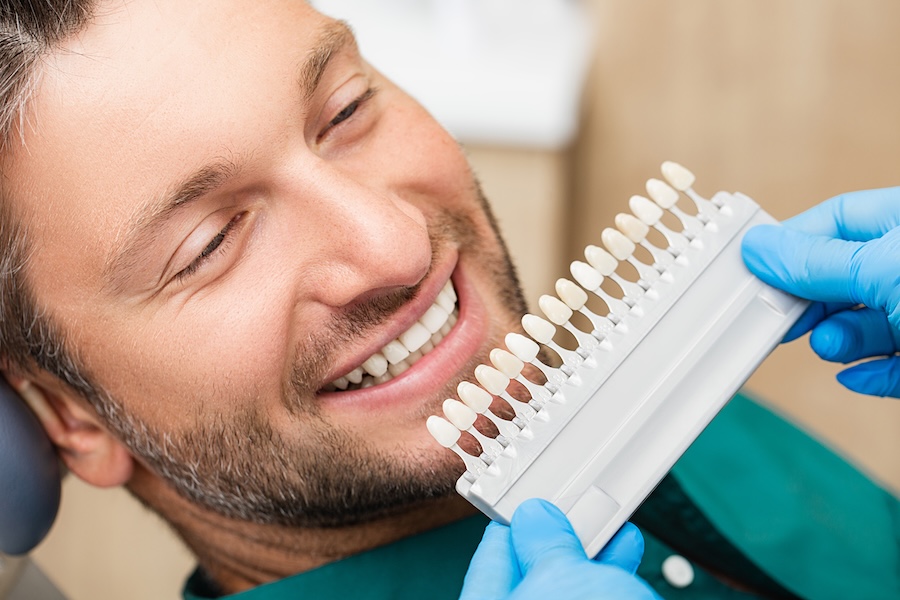
Color is customized as well. The porcelain can be matched to nearby enamel or used to brighten several front teeth together. Slight variation in shade and translucency helps the porcelain resemble enamel instead of looking flat or overly uniform.
Veneers Can Change Tooth Shape
Tooth shape is one of the most common reasons patients ask about veneers. A tooth may look too square, too rounded, narrow near the edge, or slightly uneven beside its neighbor. Veneers can adjust those proportions without making every tooth look identical.
For example, a short, wide tooth may be given a longer and more balanced appearance. A narrow tooth can sometimes be widened so it fills the space more naturally. Worn or uneven edges can also be rebuilt to create a smoother smile line.
These changes are often measured in fractions of a millimeter, yet they can make a noticeable difference. Front teeth sit side by side, so small differences are easy to spot. Careful planning keeps the change refined rather than overdone.
They Can Make Small Teeth Look More Proportional
Some adults naturally have one or more teeth that are smaller than average. This commonly affects the lateral incisors, which sit beside the two front teeth. When one is narrow or pointed, it may leave extra space or make the neighboring teeth look larger.
A veneer can add width, length, or both. The aim is not simply to make the tooth bigger, but to bring it into better proportion with the rest of the smile. The gumline, neighboring teeth, and amount of visible tooth all help guide the design.
There is still a limit to how much size can be added without making the tooth look bulky. When the space is larger, orthodontic treatment may be useful first so the room is distributed more evenly. That can keep one veneer from carrying more width than looks natural.
Veneers Can Restore Length to Worn Teeth
Front teeth often become shorter over time. Grinding, clenching, nail biting, and everyday wear can gradually flatten the edges. The change may happen so slowly that you notice it only after comparing an older photograph.
Veneers can restore some of that lost length when the teeth and bite can support it. The new edge is shaped to fit the smile and the way the upper and lower teeth move past each other. Dr. Neaville will check the bite carefully because added length needs enough room during chewing and jaw movement.
Grinding also needs to be addressed before the final treatment plan is settled. A nightguard may be recommended after veneers are placed if you clench or grind during sleep. Porcelain is strong, but it still has to survive whatever your jaw gets up to after bedtime.
Uneven Edges Can Be Smoothed Out
Not every veneer case involves a large change. Sometimes the aim is simply to make chipped or uneven edges look more consistent. Porcelain can rebuild those areas while preserving a natural amount of variation between the teeth.
One front tooth may be slightly shorter than the other, or several edges may have worn at different angles. Correcting those details can make the smile look more balanced without changing its overall character. Often, the result is noticeable without looking newly manufactured.
Minor edge concerns may also be treated with bonding or enamel contouring. Those options can be more conservative when the color and overall shape of the tooth are already acceptable. We can compare how each option looks, how long it tends to last, and how much tooth structure it requires.
Veneers Can Change Tooth Color
Porcelain veneers can cover discoloration that does not respond well to whitening. This may include deep internal staining, enamel defects, or a tooth that darkened after an injury. The veneer creates a new visible surface while the natural tooth remains underneath.
The shade can be selected to match nearby teeth or to brighten several teeth together. However, the best color is not always the brightest shade available. Skin tone, neighboring enamel, and the amount of tooth shown when smiling all affect what looks balanced.
Porcelain also needs enough depth and variation to resemble natural enamel. Teeth are not one solid color from the gumline to the edge, and veneers should not be either. A little translucency near the edge can keep the result from looking dense or opaque.
Whitening May Come Before Veneers
When veneers are planned for only a few teeth, whitening the surrounding teeth first may help. Porcelain does not change color after it is made, so the final shade needs to coordinate with the nearby enamel. Whitening afterward could leave the natural teeth lighter than the veneers.
The timing needs some planning because freshly whitened teeth may need time for the shade to settle. Once the surrounding teeth reach a color you like, the veneers can be matched to them. This often makes more sense than placing additional veneers on teeth that already have a good shape and healthy enamel.
Whitening is not necessary in every case. When veneers are being designed across the visible smile, the shade may be planned as a group. Dr. Neaville can explain whether whitening first would improve the final blend or simply add another step.
Veneers Can Close Small Spaces
Small gaps between front teeth can sometimes be closed with veneers. A little width is added to the neighboring teeth so the space disappears while the proportions remain balanced. This can work well when the gap is limited and the bite is stable.
Larger spaces need more planning because adding too much width can make the teeth look heavy. In those situations, Invisalign or another orthodontic treatment may create a better starting point. Once the teeth are positioned more evenly, veneers can focus on shape and color rather than carrying the full correction.
Some spaces come from tooth size, while others are related to tooth position, missing teeth, or the tissue between the front teeth. Looking at what created the space helps us choose an approach that looks balanced and works well in the bite. It also keeps the final teeth from looking wider than they should.
Slightly Crooked Teeth May Look Straighter
Veneers can sometimes improve the appearance of teeth that are mildly rotated or uneven. By changing the visible front surface, a tooth may look more aligned even though its root has not moved. This works best when the starting position is close enough that the porcelain can stay thin and natural-looking.
A tooth that projects forward may require more enamel reduction to create a straighter appearance. A tooth sitting too far inward may need added thickness, which can look bulky if the change is pushed too far. The starting position determines how much can be corrected with porcelain alone.
When crowding or rotation is more noticeable, orthodontic treatment may be the better first step. Moving the teeth can reduce how much enamel needs to be removed and give the veneers a better foundation. It takes longer, but the final result may be more natural and easier to maintain.
Veneers Do Not Move the Roots
Veneers can improve the way alignment looks, but they do not move the roots beneath the gums. The porcelain changes the visible surface while the natural tooth stays in its original position. That means veneers cannot correct every bite or spacing concern.
If a tooth is severely rotated, crowded, or pushed forward, covering it may require too much preparation. The veneer may also become too thick if the tooth sits well behind the others. In those cases, moving the tooth first usually gives us more room to create a natural result.
Dr. Neaville will look at the smile from the front, side, and biting surfaces before recommending treatment. A straight-on photograph may make a case look simple, while the bite reveals a concern that needs another approach. Seeing the teeth from several angles helps us avoid forcing porcelain to correct something orthodontics would handle better.
Custom Design Keeps the Smile From Looking Generic
Many patients worry that veneers will look too large or too white. That concern usually comes down to design choices, including the shape, length, texture, edge position, and shade. Those details determine whether the veneers blend naturally or stand out.
Some smiles suit softer, more rounded edges, while others look better with slightly squarer contours. The length also needs to work with the lips and the amount of tooth shown when speaking. A design that looks good on a close-up image still needs to make sense with the whole face.
Small surface details help porcelain resemble enamel. Gentle texture, slight shade variation, and carefully shaped edges keep the teeth from looking flat. Often, the best design is the one that does not call attention to the fact that dental work was done.
The Number of Veneers Depends on What Shows When You Smile
Some patients need one veneer for a single chipped or discolored tooth. Others choose veneers across the social six or farther back toward the premolars so the visible teeth can be planned together. The right number depends on how broad the smile is and where the color or shape change would end.
Many people show six to ten upper teeth when they smile, although every smile is a little different. If the veneers stop in a highly visible area, a sharp change in color or shape may stand out. Planning around the full smile helps the transition look smoother.
The condition of the neighboring teeth also affects the decision. If they already have an attractive shape and are close to the desired shade, fewer veneers may be needed. We aim to treat the teeth that would benefit from porcelain without extending treatment farther than the smile requires.
A Consultation Includes More Than Choosing a Shade
Before planning veneers, Dr. Neaville will examine the teeth, gums, and bite. We look for decay, cracks, older fillings, gum inflammation, and signs of clenching or grinding. These findings may need to be addressed before the final design begins.
We will also ask what you like and dislike about your current smile. It helps to be specific, whether the concern is color, length, one uneven edge, or several teeth that feel out of proportion. The more clearly we understand the goal, the easier it is to keep the changes focused.
Photographs, X-rays, impressions, or digital scans may be used during planning. These records help us study the teeth from several angles and communicate the design to the dental laboratory. They also give us a reliable starting point before any preparation takes place.
You Will Preview the Proposed Shape
Before the final porcelain is made, we can use a wax-up, digital design, or temporary mock-up to preview the proposed changes. This allows you to see the general length, width, and contour of the teeth before the veneers are finalized. It is especially helpful when several front teeth are being changed together.
The preview may show that one edge feels too long, a corner looks too square, or a tooth appears more prominent than expected. Those details are much easier to adjust during planning than after the porcelain has been completed. A small change at this stage can make the final smile feel much more like you.
We can also look at how the proposed shape works with speech and lip movement. Added length may affect certain sounds at first, and the lips may rest differently against the new contours. Testing the design gives us information that a photograph alone cannot provide.
Some Enamel Is Usually Removed
Traditional porcelain veneers usually require a thin layer of enamel to be removed from the front of the tooth. This creates room for the porcelain so the finished tooth does not look bulky. The amount depends on the original shape, position, and color.
Because enamel is removed, veneers are considered an irreversible treatment. Once a tooth has been prepared, it will continue to need a veneer or another type of restoration over time. That is why we plan the preparation carefully and remove only what is needed for the design.
Some teeth require very little reduction, while others need more reshaping. A “no-prep” approach is not automatically better if it leaves the tooth looking too thick or fails to cover deep discoloration. The preparation needs to suit the tooth rather than a marketing label.
Temporary Veneers Let You Try the Changes
After the teeth are prepared, temporary veneers may be placed while the laboratory creates the final porcelain. These temporaries protect the teeth and give you an early look at the planned shape. They may not feel as smooth or refined as the final veneers, but they are useful for checking comfort and appearance.
During this stage, pay attention to the length, speech, bite, and way the teeth show when you smile. The changes may feel unfamiliar for the first few days, so it helps to give your mouth a little time to adjust. Even so, let us know when something consistently feels too long, bulky, or uneven.
Temporary veneers are not as strong as the finished porcelain. Sticky or very hard foods can loosen or break them, so a little caution is needed. They are meant to guide the final design, not to test whether peanut brittle still belongs on the menu.
The Final Veneers Are Checked Before Bonding
When the final veneers return from the laboratory, Dr. Neaville will check their fit, shape, and color. They can be placed temporarily on the teeth so you can see how they look before they are bonded. This gives us one more opportunity to review the shade, length, and overall balance.
The veneers are then bonded to the prepared enamel with dental cement. Afterward, the bite is checked so the new edges are not taking too much pressure. Small refinements may be made so the teeth feel comfortable when you close and move your jaw.
The gums may feel mildly tender at first, and the teeth can be sensitive to temperature for a short time. As the mouth adjusts, speaking and chewing usually begin to feel more familiar. Any lingering pressure or sharp edge can be checked and adjusted.
Veneers Still Need Daily Care
Porcelain cannot develop a cavity, but the natural tooth underneath and around it still can. Plaque may collect along the edges, particularly near the gumline. Brushing and flossing remain important after veneers are placed.
Use a soft toothbrush and clean carefully between the teeth. The aim is to keep the gums healthy without scrubbing aggressively along the margins. Dr. Neaville may recommend a particular flossing tool when several veneers sit beside one another.
Routine dental visits allow us to check the porcelain, bite, gums, and underlying teeth. Small chips, gum changes, or signs of grinding are easier to manage when they are noticed early. Healthy tissue around the veneers also helps the final result keep its clean, natural appearance.
Certain Habits Can Damage Veneers
Porcelain veneers are designed for normal biting and chewing, but they are not tools. Biting fingernails, opening packages, chewing ice, or holding objects between the teeth can chip the edges. Those habits are hard on natural enamel as well, so porcelain does not get a free pass.
Hard foods do not always need to be avoided, but using some common sense helps. Cutting an apple instead of biting straight into it with the front veneers can reduce pressure on the edges. The same goes for hard candy, crusty bread, and anything that makes you pause before taking the first bite.
Grinding and clenching can also place heavy force on the porcelain. If you have worn teeth, jaw soreness, or a history of broken dental work, a nightguard may be recommended. Protecting the veneers at night can help preserve the length and shape you worked to create.
Veneers Will Need Attention Again in the Future
Veneers can remain attractive and functional for many years, but they may eventually need repair or replacement. The porcelain can chip, the gumline may change, or the bonding may weaken over time. Normal wear and changes in the surrounding teeth can also affect how they look.
When a veneer needs replacement, the old porcelain is removed and the underlying tooth is checked. A new veneer is then designed around the tooth structure, gumline, and neighboring teeth as they look at that time. In many cases, the replacement process is straightforward.
Conservative preparation helps protect the tooth over the long term. Preserving as much enamel as possible gives the veneer a strong surface to bond to and leaves more natural tooth structure in place. That can make future maintenance or replacement more straightforward.
Veneers, Bonding, Whitening, or Orthodontics?
Veneers are not the only way to improve a smile. Bonding may repair a small chip or reshape one tooth with less preparation. Whitening may be enough when color is the main concern and the tooth shape is already attractive.
Invisalign or braces may make more sense when tooth position is the larger issue. Moving the teeth can correct crowding and bite concerns without covering the enamel. Veneers may still be considered afterward for shape or color, but orthodontic treatment sometimes addresses the main concern on its own.
The final plan may also combine treatments. Whitening, minor gum reshaping, bonding, or orthodontics can sometimes reduce the number of veneers needed. Dr. Neaville can compare the options so the plan fits both the smile and the long-term health of the teeth.
Custom Veneers at Neaville Family Dentistry in Searcy
Custom veneers can change the visible shape, size, length, and color of selected teeth. They may be useful for worn edges, small teeth, deep discoloration, minor gaps, and certain alignment concerns. The best results come from careful design, healthy teeth and gums, and a bite that can support the porcelain.
At Neaville Family Dentistry in Searcy, AR, Dr. Keith Neaville can examine the teeth and talk through what you would like to change. We can compare veneers with whitening, bonding, or orthodontic treatment and explain what each option could accomplish. You will also be able to preview the proposed shape before the final porcelain is completed.
Schedule a consultation when you are ready to explore veneers but still want the result to feel like your own smile. Bring photographs, questions, or examples of details you like, and we can sort through what fits your features and teeth. We would be happy to help you plan a smile that feels polished, natural, and easy to enjoy!
Categorised in: Dental Veneers