
What Is Periodontal Care and When Are Bleeding Gums a Sign You Should Call a Dentist?
June 24, 2026 9:00 amBleeding gums are easy to brush off. You may see a little pink in the sink after brushing, notice blood when you floss around one area, and move on with the rest of your day. However, when bleeding keeps showing up, it usually means the gums are irritated and need attention.
It can help to think about the gums as more than a thin line around each tooth. If you could flatten out all of the gum tissue in your mouth, it would cover an area roughly the size of your palm. If a patch of skin that size elsewhere on your body stayed red, swollen, tender, and prone to bleeding, you would probably want to know what was causing it. The gums deserve that same attention.
Periodontal care focuses on the gums, the bone underneath them, and the tissues that help keep teeth stable. It includes more than a quick look during a cleaning. The dentist checks for inflammation, tartar below the gumline, gum recession, deeper spaces around the teeth, and changes in the bone that supports them.
At Neaville Family Dentistry in Searcy, AR, Dr. Keith Neaville can look at bleeding gums in the context of your whole mouth. Sometimes the issue comes down to plaque sitting near the gumline and a few areas that need more thorough cleaning. In other cases, the gums need deeper treatment and closer follow-up to bring the inflammation under control.
What Periodontal Care Includes
Periodontal care is dental care focused on the structures around the teeth. That includes the gums you can see, the gum tissue below the surface, and the bone that helps hold each tooth in place.
Healthy gums should sit closely around the teeth without frequent bleeding or swelling. When plaque builds up near the gumline, the gums can become inflamed. If that plaque hardens into tartar, brushing and flossing at home cannot fully remove it.
For some people, periodontal care begins with a regular cleaning and a closer gum evaluation. Dr. Neaville or the hygiene team may check for bleeding, measure the spaces between the gums and teeth, and review X-rays for signs that the bone around the teeth has changed.
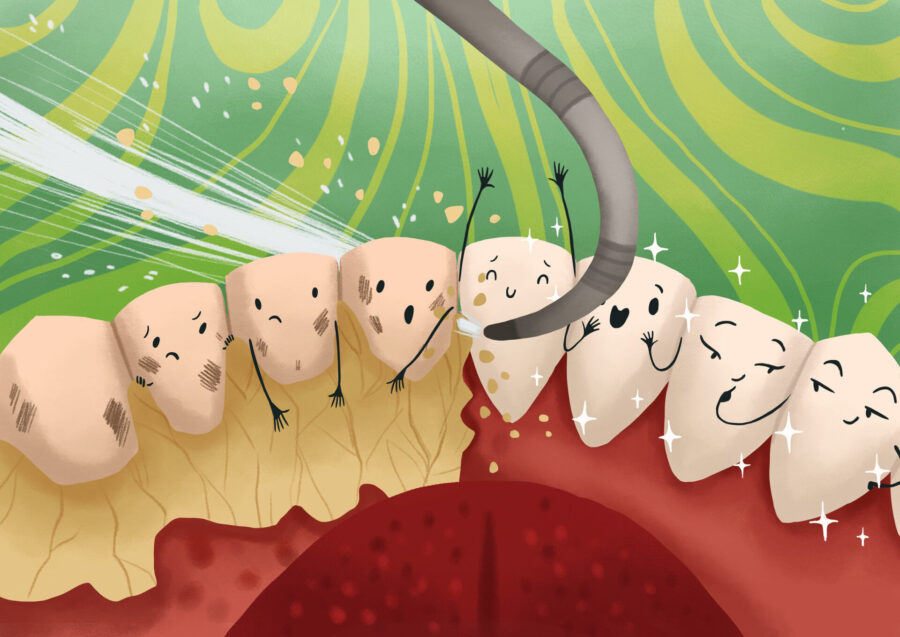
When buildup has collected below the gumline, a deeper cleaning called scaling and root planing may be recommended. This therapeutic treatment removes tartar and bacteria from below the gums and smooths the root surfaces where buildup can collect.
After that first stage of treatment, some patients need periodontal maintenance visits more often than a typical cleaning schedule. Those visits are meant to keep the gums stable, remove buildup in harder-to-reach areas, and watch for changes before they become more involved.
Why Gums Bleed in the First Place
Bleeding gums often begin with plaque near the gumline. Plaque is a sticky film of bacteria that forms every day, even when you brush regularly. When it stays around the gums long enough, the tissue can become red, puffy, tender, and more likely to bleed.
At first, you may only notice bleeding when you floss or brush. Then the gums may start looking darker red than usual, or they may feel sore when you clean around certain teeth. Once plaque hardens into tartar, the irritation can continue because the rough tartar surface gives more bacteria a place to collect.
A change in flossing can also bring bleeding to your attention. Someone who has not flossed regularly may start again and notice blood for several days. Often, the floss is not creating the problem. It is cleaning around gums that were already inflamed.
Still, bleeding that continues is worth bringing up. The pattern can help Dr. Neaville see whether you are dealing with mild irritation, buildup that needs to be removed professionally, or gum disease that has started moving below the gumline.
When Bleeding Gums Need More Than Better Brushing
One day of bleeding is different from seeing blood every time you floss. If the same area keeps bleeding, the gums stay swollen, or you have started avoiding a spot because it always feels tender, it is time to schedule an exam.
It is also worth calling when bleeding comes with persistent bad breath, a bad taste, gum recession, or gums that seem to pull away from the teeth. These signs do not all point to the same issue, but together they can show that the gums need more than a quick change in brushing technique.
The lack of pain can make gum problems easy to delay. However, gums can be inflamed for a long time before a person feels much discomfort. That is one reason periodontal disease can move forward quietly while the teeth themselves still seem fine.
An exam gives the office a chance to check where the bleeding is coming from, whether tartar is present below the gumline, and whether the gum tissue has started pulling away from the teeth.
Gingivitis and Periodontal Disease Are Different Stages
Gingivitis is the early stage of gum disease. It affects the gums and often causes redness, swelling, tenderness, and bleeding. At this point, the deeper bone support around the teeth has not been damaged.
Periodontal disease is more advanced. The inflammation reaches the tissues and bone that help support the teeth. As the gums pull away, deeper spaces can form between the teeth and gums. Those areas are harder to clean with a toothbrush or floss alone, so bacteria can collect more easily.
This is where periodontal care becomes more involved. The dentist may measure gum pockets, review X-rays, remove buildup below the gums, and recommend a maintenance schedule based on what is happening around each tooth.
The first step is not trying to decide the stage on your own. It is getting a clear look at the gums, bone levels, and areas where plaque may be collecting below the surface.
What Happens During a Periodontal Exam
A periodontal exam is more detailed than simply checking for cavities. Dr. Neaville and the hygiene team may look at the color and condition of the gums, check for swelling and bleeding, and measure the spaces between the teeth and gums.
Those spaces are often called periodontal pockets. When the pockets are deeper, plaque and bacteria have more room to collect below the gumline. That also makes those areas harder to keep clean at home.
X-rays may be used to check the bone around the teeth. The team may also look for tartar buildup, gum recession, loose teeth, and areas where food keeps collecting.
Afterward, the office can explain what they found and what should happen next. Some people may need a routine cleaning and more focused home care. Others may need scaling and root planing, periodontal maintenance, or a referral for additional treatment.
Bad Breath, Receding Gums, and Loose Teeth Can Be Warning Signs
Bleeding is not the only sign of gum trouble. Persistent bad breath can happen when bacteria build up around the gums and between teeth. A bad taste that returns even after brushing can be another clue.
Gum recession may make teeth look longer than they used to. It can also expose areas that are more sensitive to cold and more likely to collect plaque. You may notice food catching in places where it never used to, especially near the gumline.
In more advanced cases, a tooth can begin to feel different when you bite down. It may not look loose, but it may feel less stable than nearby teeth because the support around it has changed.
These changes often build gradually. That is why regular exams are useful, but it is also why calling when something feels different can be worthwhile.
Home Care Still Has a Big Role
Professional periodontal care works best alongside regular home care. Brushing twice a day removes plaque from the tooth surfaces, while cleaning between the teeth reaches areas that a toothbrush misses.
Floss may work well for some people. Others may do better with interdental brushes, a water flosser, or another tool based on the spaces between their teeth and the type of dental work they have. Dr. Neaville can help narrow that down so the routine feels practical enough to keep doing.
Technique also makes a difference. Brushing quickly can leave plaque along the gumline, while brushing too hard can irritate the tissue. A soft-bristled toothbrush and a thorough but gentle approach usually work better than scrubbing.
Tobacco use can make gum disease harder to manage. Conditions such as diabetes can also affect gum health, so it helps to keep the dental team updated when medications or health conditions change.
When a Deep Cleaning May Be Recommended
A deep cleaning, also called scaling and root planing, is usually recommended when tartar and bacteria have collected below the gumline. This is different from a routine cleaning because the focus reaches below the visible part of the teeth and onto the root surfaces.
The treatment may be completed in sections, depending on how much of the mouth needs care. The area can be numbed so Dr. Neaville or a hygienist can work below the gums more comfortably.
Afterward, the gums may feel tender for a short time, particularly when there was significant inflammation or buildup. The purpose is to remove the material that keeps irritating the gums and contributing to deeper pockets.
The deep cleaning is often the first phase of improving periodontal health. Once that buildup has been removed, the next step is keeping it from collecting again in the same areas.
Why Periodontal Maintenance Is Often Needed Every Three to Four Months
After scaling and root planing, the goal is to maintain the improvement that came from the initial periodontal therapy. The treatment removes tartar and bacterial buildup below the gumline, which gives the gums a chance to become healthier and less inflamed.
However, plaque begins forming again soon after it is removed. When bacteria collect below the gumline, normal brushing and flossing cannot fully reach those deeper areas. As time passes, that buildup can become more harmful to the gums and bone around the teeth.
For that reason, periodontal maintenance visits are often scheduled every three to four months. The timing gives the dental team a chance to remove buildup before it has more time to grow and become more pathogenic.
These appointments are not simply extra cleanings. They are meant to maintain the periodontal health that was improved during the initial treatment, while also checking for new bleeding, pocket changes, tartar buildup, or areas that have become harder to clean.
Some patients stay on this schedule for a long time. Others may eventually need fewer visits depending on how their gums respond, their home care, and the condition of the bone and tissues around their teeth.
When You Should Call Neaville Family Dentistry
Call the office if your gums bleed regularly when you brush or floss, especially when the bleeding has continued for more than a week or two. It is also worth scheduling a visit when you notice swelling, persistent bad breath, a bad taste, gum recession, tenderness, or a tooth that feels different when you chew.
You do not need to wait until the gums are severely painful. Ongoing bleeding, swelling, and irritation are enough reason to have the area checked.
At Neaville Family Dentistry in Searcy, AR, Dr. Keith Neaville can evaluate what is causing the bleeding and explain whether you need a routine cleaning, periodontal treatment, or a different approach at home. Call to schedule a visit when your gums have started bleeding regularly or when your mouth no longer feels as healthy as it usually does.
Image from Authority Dental under CC 2.0
Categorised in: Gum Health