
What Are Dental Sealants and When Should Children or Adults Get Them?
May 22, 2026 9:00 amBack teeth are built for chewing, which means they are full of grooves, pits, and narrow spaces that help break food down. Those same grooves can also be frustratingly good at holding onto plaque and crumbs. Even with good brushing, a toothbrush bristle may not reach the deepest parts of those tiny channels, especially on newly erupted molars.
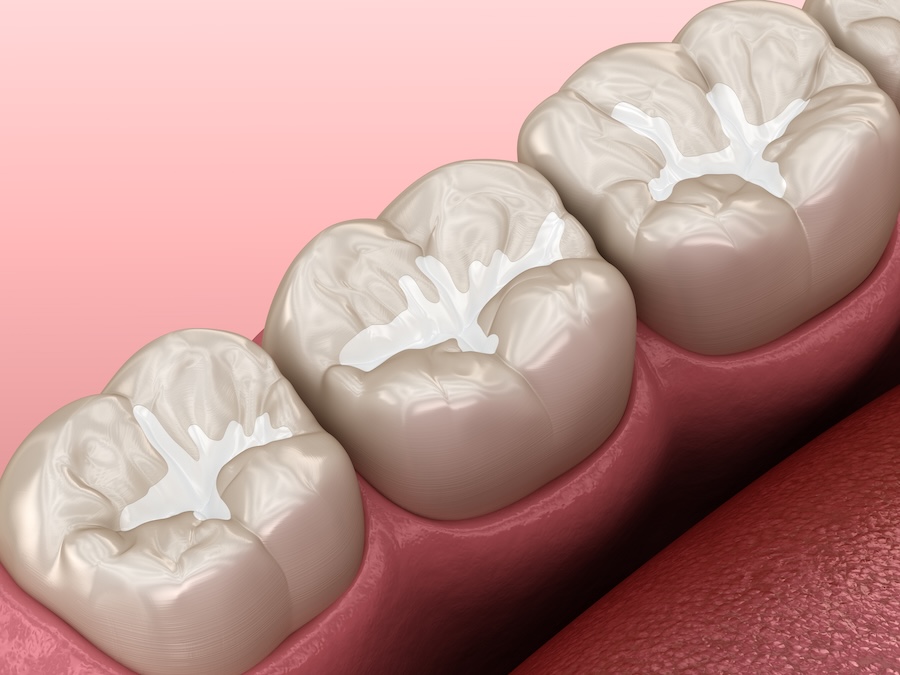
That is where dental sealants can help. A dental sealant is a thin protective coating placed over the chewing surface of a back tooth. It does not cover the whole tooth, and it does not replace brushing or flossing. Instead, it helps smooth over the deep grooves where cavities often start, making the tooth easier to keep clean.
At Neaville Family Dentistry in Searcy, AR, Dr. Keith Neaville may recommend dental sealants for children, teens, and some adults who have cavity-prone grooves in their molars or premolars. Sealants are often thought of as a kids’ treatment, but adults can benefit from them too in the right situation. The timing depends on the tooth, the cavity risk, and whether the surface is healthy enough to seal.
What Are Dental Sealants?
Dental sealants are thin coatings placed on the chewing surfaces of back teeth. They are most often used on molars and sometimes premolars because these teeth have deep grooves that can be harder to clean than smooth front teeth.
The sealant material flows into the pits and grooves, then hardens into a protective layer. Once in place, it helps keep food and bacteria from settling into those tiny spaces. The surface becomes smoother, which can make brushing more effective.
Sealants are usually clear, white, or slightly tinted, so they do not stand out much when placed on back teeth. Most people do not notice them when talking or smiling because they sit on the chewing surface.
A sealant is preventive, not restorative. That means it is used to protect a healthy or cavity-prone tooth before decay causes damage. If a tooth already has a cavity, the treatment may need to be a filling instead.
Why Back Teeth Are More Likely to Need Sealants
Molars and premolars do a lot of work. They crush and grind food every day, and their chewing surfaces are not flat like a countertop. They have ridges, valleys, pits, and grooves that vary from person to person.
Some teeth have shallow grooves that are easy to brush. Others have deep, narrow grooves that trap plaque even when a person brushes well. Children can have an especially hard time cleaning new molars because those teeth sit far back and may not fully line up with the bite at first.
New permanent molars are also more vulnerable because the enamel is still maturing after the tooth comes in. During that window, cavity prevention is especially helpful.
Sealants give those back teeth an extra layer of protection in the places where decay often begins. They are not a guarantee against cavities, but they can lower risk when used on the right teeth.
When Should Children Get Dental Sealants?
Children often benefit from sealants when their permanent molars come in. The first permanent molars usually erupt around age six, and the second permanent molars often come in around age twelve. These are common times to evaluate whether sealants would be helpful.
The timing is important because sealants work best before decay starts. Once the molar has fully erupted enough to keep the area dry during placement, the tooth can usually be evaluated for sealants.
Some children need sealants soon after the molars come in because their grooves are deep or their cavity risk is higher. Others may not need them if the grooves are shallow, the teeth are easy to clean, and the child has a low risk of decay.
At Neaville Family Dentistry, Dr. Keith Neaville can check your child’s molars during routine visits and let you know whether sealants make sense. Parents do not have to guess based on age alone. The shape and health of the tooth matter too.
Can Baby Teeth Get Sealants?
Sealants are most often placed on permanent molars, but baby teeth can sometimes be sealed too. This may be recommended if a baby molar has deep grooves and the child has a higher risk of cavities.
Baby teeth may be temporary, but they still need to stay healthy until they are ready to fall out naturally. They help children chew, speak clearly, and hold space for adult teeth. If a baby molar develops a cavity, it can cause discomfort and may need a filling, crown, or other treatment.
A sealant on a baby tooth may be considered when the tooth is expected to stay in the mouth for several more years and has a chewing surface that tends to trap plaque. It is not needed for every child or every baby molar.
Dr. Neaville can evaluate the tooth and explain whether sealing it is worth doing. The decision usually depends on your child’s age, cavity history, tooth shape, and how long the tooth is likely to remain in place.
Do Teenagers Still Benefit From Sealants?
Teenagers can still benefit from dental sealants, especially when second molars come in or when existing sealants need to be checked. By the teen years, eating habits, sports drinks, snacking, orthodontic treatment, and busy schedules can all affect cavity risk.
Second molars are far back in the mouth, which makes them harder to clean well. If they have deep grooves, sealants may help protect them during a stage of life when routines can be inconsistent.
Teens who have braces or aligners may also need extra preventive support. Orthodontic appliances can make brushing more time-consuming, and plaque can build up more easily in certain areas. Sealants do not protect every surface, but they can help protect the chewing grooves of back teeth.
If a teen already has sealants, they should still be checked at regular dental visits. Sealants can wear down, chip, or loosen over time. When that happens, they may need to be repaired or replaced.
Can Adults Get Dental Sealants?
Yes, adults can get dental sealants in the right situation. Although sealants are often associated with children, adults may benefit if they have deep grooves in their molars or premolars and no decay on those surfaces.
An adult who has never had cavities in certain back teeth may still have grooves that are difficult to clean. If those teeth are at risk, sealing them may help prevent future decay.
Sealants may also be discussed for adults who have dry mouth, a history of cavities, difficulty cleaning certain teeth, or dietary habits that increase cavity risk. However, if the tooth already has a filling, crown, or cavity in that area, a sealant may not be the right option.
The best way to know is through an exam. Dr. Neaville can look at the chewing surfaces and determine whether a sealant would be useful or whether another treatment is needed.
Who Is More Likely to Need Sealants?
Some patients are more cavity-prone than others, even when they brush. Sealants may be especially helpful for children or adults with deep molar grooves, a history of cavities, dry mouth, orthodontic appliances, or trouble reaching back teeth while brushing.
Diet can play a role too. Frequent snacking, sipping sugary drinks, or drinking sports drinks can increase acid attacks on the teeth. If a tooth already has deep grooves, those habits can make it easier for decay to begin.
Younger children may need sealants because they are still learning how to brush thoroughly. Adults may need them because of dry mouth, changes in medication, exposed grooves, or a past pattern of cavities.
Sealants are not placed just because a tooth exists. They are recommended when the tooth has a surface that would likely benefit from extra protection.
How Dental Sealants Are Placed
Getting a dental sealant is usually quick and comfortable. The tooth is cleaned first so plaque and debris are removed from the chewing surface. Then the tooth is kept dry, which helps the sealant bond properly.
A conditioning solution may be placed briefly on the tooth to prepare the surface. After that, the tooth is rinsed and dried again. The sealant material is then flowed into the grooves and hardened, often with a special curing light.
There is no drilling or numbing for a routine sealant. Most patients only need to stay still while the tooth is cleaned, dried, and sealed. Children usually tolerate the process well because it is simple and does not feel like a filling.
After placement, the dentist or hygienist may check the bite to make sure the sealant does not feel too high. If it does, it can be adjusted so the tooth feels comfortable when chewing.
What Sealants Feel Like After Placement
After a sealant is placed, the tooth may feel slightly different for a short time. Some patients notice the surface feels smoother, glossier, or a little raised at first. That feeling usually settles as the bite adjusts and the tongue gets used to the new surface.
A sealant should not feel sharp or painful. It should not make chewing uncomfortable. If the bite feels off or the tooth feels like it hits too soon, call the office so it can be checked.
Children may be curious and run their tongue over the sealant at first. That is normal. The material is bonded to the tooth, but it is still a good idea to avoid chewing hard objects like ice, pens, or fingernails.
Most patients can eat after sealants are placed unless the dental team gives different instructions. Dr. Neaville or the team can let you know if there is anything specific to avoid.
How Long Do Dental Sealants Last?
Dental sealants can last for several years, but they should be checked regularly. Chewing pressure, grinding, sticky foods, and normal wear can affect how long they stay intact.
A sealant does not need to last forever to be useful. Even a few years of protection during a cavity-prone stage can be valuable, especially for children whose permanent molars are newly erupted.
During regular checkups, the dental team will look at the sealants to make sure they are still covering the grooves. If a sealant is chipped, worn, or missing, it may be repaired or replaced.
Parents do not need to monitor every tiny change at home, but they should keep regular dental visits. Sealants work best when they are part of ongoing preventive care.
Can Cavities Form Under Sealants?
A properly placed sealant on a healthy tooth helps protect the grooves from bacteria and food particles. However, sealants need a clean, dry surface and good bonding to work well.
If a sealant wears down, breaks, or lifts at the edge, bacteria may get underneath or around it. That is why regular checkups are important. The dentist can see whether the sealant is still sealed tightly or needs attention.
Cavities can also form on parts of the tooth that sealants do not cover. Sealants protect the chewing grooves, but they do not cover between the teeth or along the gumline. Brushing and flossing are still needed every day.
If a tooth already has decay, sealing over it may not be appropriate. Dr. Neaville will check the tooth first to make sure a sealant is the right preventive choice.
Do Sealants Replace Brushing and Flossing?
Sealants do not replace brushing, flossing, fluoride, or regular dental visits. They are an added layer of protection for specific tooth surfaces.
A child with sealants still needs to brush twice a day and clean between the teeth as directed. Adults need the same routine. Sealants make deep grooves easier to protect, but plaque can still collect on other surfaces.
Flossing is especially important because sealants do not protect between teeth. Cavities can still form where teeth touch if plaque and food are not removed.
Think of sealants as help for the hardest-to-clean chewing surfaces, not a free pass to ignore daily care. They work best alongside good habits.
Sealants vs. Fillings
Sealants and fillings are not the same thing. A sealant is preventive. It is placed on a healthy or cavity-prone surface to reduce the risk of decay.
A filling is restorative. It is used after decay has damaged the tooth. The decayed area is removed, and the filling replaces the missing tooth structure.
This difference is important because sealants are usually simpler, quicker, and more conservative than fillings. They do not require removing tooth structure when placed on a healthy tooth.
If Dr. Neaville sees that a groove is only stained but not decayed, a sealant may be possible. If the area has an active cavity, a filling or another restoration may be needed instead.
Are Dental Sealants Safe?
Dental sealants have been used for many years as a preventive dental treatment. They are commonly recommended for children and teens because they can help reduce the risk of cavities in back teeth.
Parents sometimes ask about the material itself. Sealant materials are placed in very small amounts and are hardened on the tooth. If you have concerns about materials, allergies, or sensitivities, bring them up during your child’s visit.
Dr. Neaville can explain what type of sealant material is used and why it may be recommended. It is always reasonable to ask questions before treatment, especially when making decisions for your child.
For many families, the benefit is straightforward: sealants can help protect hard-to-clean molars during cavity-prone years, often without drilling or numbing.
Do Insurance Plans Cover Sealants?
Many dental insurance plans fully or mostly cover sealants for children, especially on permanent molars within certain age ranges. Coverage often depends on the plan’s rules, the tooth being sealed, and whether the tooth has already had decay or a restoration.
Adult sealant coverage can be less predictable. Some plans may cover them, while others may consider them a preventive service only for children. If you are an adult interested in sealants, it is worth checking your plan.
Even when sealants are covered, there may be limits. Insurance may only cover certain teeth, certain ages, or replacement after a specific number of years.
The team at Neaville Family Dentistry can help estimate benefits, but the insurance company makes the final decision when a claim is processed.
When Sealants May Not Be Recommended
Sealants are helpful in many cases, but they are not right for every tooth. If the tooth already has a cavity, a filling may be needed instead. If the grooves are shallow and easy to clean, a sealant may not offer much added benefit.
A sealant may also not be recommended if the tooth cannot be kept dry during placement. Moisture can interfere with bonding, so partially erupted molars may need to be watched until they come in farther.
If a tooth already has a large filling, crown, or other restoration on the chewing surface, a sealant usually is not the right choice for that area. The tooth may need a different kind of protection.
The recommendation should fit the tooth in front of the dentist. Some teeth benefit from sealants right away, while others simply need to be monitored.
Dental Sealants for Children and Adults in Searcy, AR
Dental sealants are a simple preventive option that can help protect cavity-prone grooves in back teeth. They are commonly recommended for children when permanent molars come in, but teens and adults may benefit too if their teeth have deep grooves and no active decay.
At Neaville Family Dentistry in Searcy, AR, Dr. Keith Neaville can evaluate whether sealants make sense for you or your child. The decision is based on tooth shape, cavity risk, age, oral hygiene, and whether the chewing surface is healthy enough to seal.
If your child’s permanent molars are coming in, or if you have back teeth that seem to trap food no matter how well you brush, schedule a visit with Neaville Family Dentistry. A quick exam can help determine whether dental sealants are a smart way to protect those teeth before cavities start.
FAQs
What are dental sealants? Dental sealants are thin protective coatings placed on the chewing surfaces of back teeth. They help cover deep grooves where food and bacteria often collect.
At what age should children get sealants? Children are often evaluated for sealants when their first permanent molars come in around age six and when their second permanent molars come in around age twelve. Timing depends on when the teeth erupt and whether they are at risk for cavities.
Can adults get dental sealants? Yes, adults can get sealants if they have deep grooves in healthy back teeth and no active decay on those surfaces. Adult insurance coverage may vary.
Do sealants hurt? No, sealants are usually comfortable to place. A routine sealant does not require drilling or numbing. The tooth is cleaned, dried, coated, and hardened.
How long do dental sealants last? Sealants can last several years, but they should be checked at regular dental visits. If a sealant wears down or chips, it may need to be repaired or replaced.
Can you still get cavities with sealants? Yes, cavities can still form on areas the sealant does not cover, such as between teeth or along the gumline. Sealants help protect chewing grooves, but brushing, flossing, and regular dental visits are still important.
Are sealants better than fillings? Sealants and fillings do different jobs. Sealants help prevent cavities on healthy teeth. Fillings repair teeth after decay has already caused damage.
Categorised in: Dental Sealants